BNP Paribas - Personal Finance
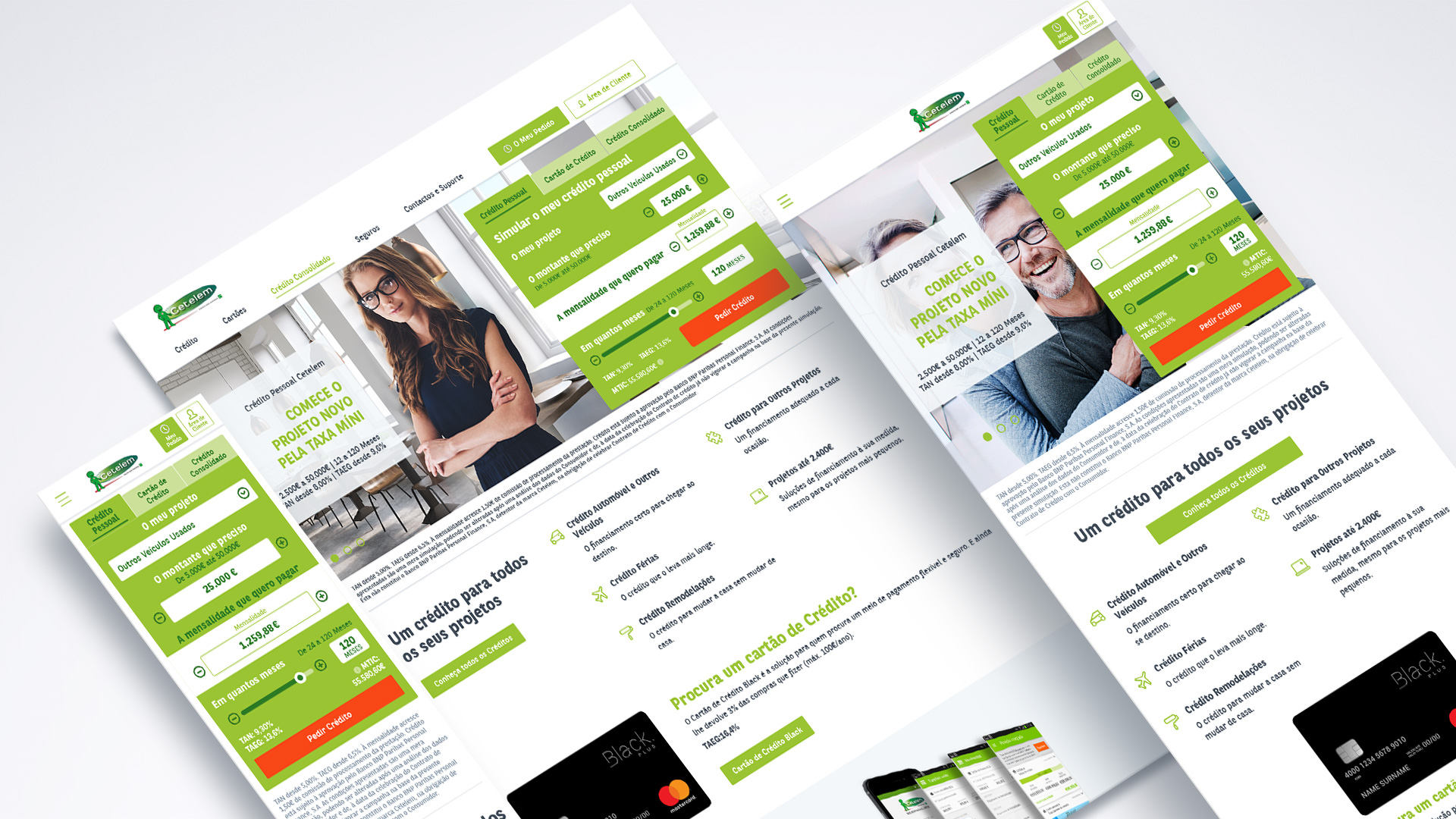
Designed the eLoan and Homebank platform apps for Cetelem, the flagship brand of BNP Paribas Personal Finance and one of Portugal's largest providers of personal loans and co-branded credit cards. This project launched the first phase of the bank's digital transformation, combining a complete UX overhaul of their main online channel with a migration to an entirely new technology platform. The redesign modernized the customer experience while establishing a scalable foundation for future digital innovation.
My role
Led end-to-end design from discovery through implementation, conducting competitive analysis, user interviews, and journey mapping to inform product strategy. Partnered closely with product and engineering teams to balance user needs with technical constraints, ensuring seamless delivery of a scalable, customer-focused platform.
Project timeline
2017-2020
Lead UX Designer @ BNP Paribas
Team: Marketing and Sales
Impact
Successfully launched the bank's digital transformation initiative, achieving a 75% conversion rate on loan applications and generating over $150M in revenue within two years. The new platform streamlined the customer journey across web and mobile, significantly reducing application time while improving user satisfaction and business outcomes.
Backstory
BNP Paribas Personal Finance is one of Portugal's leading consumer finance institutions, serving millions of customers with loan products and banking services. The organization recognized the need for digital transformation to meet evolving customer expectations and compete in the modern financial services landscape.
The Situation
The existing loan application process relied on outdated technology and phone-based interactions, creating friction at every step. Customers faced painful KYC (Know Your Customer) procedures, significant delays in document signing, and lengthy processing times. The bank needed a modern digital solution that would streamline the experience while maintaining security and compliance with financial regulations.
The Challenge
Creating a seamless digital loan application experience that works across web, iOS, and Android platforms while maintaining the highest standards of security and regulatory compliance. The solution needed to be intuitive enough for users of all ages and technical abilities.
We also needed to integrate with existing backend systems and ensure a smooth transition for both customers and internal staff who would support the new digital processes.
The Solution
We designed a comprehensive e-Loan platform that allows customers to apply for loans entirely online, with features including document upload, digital signatures, real-time application status tracking, and secure messaging with loan officers.
The Homebank integration provided customers with a unified view of their accounts, loans, and financial products, creating a cohesive digital banking experience that significantly reduced the need for branch visits.
Research & Discovery
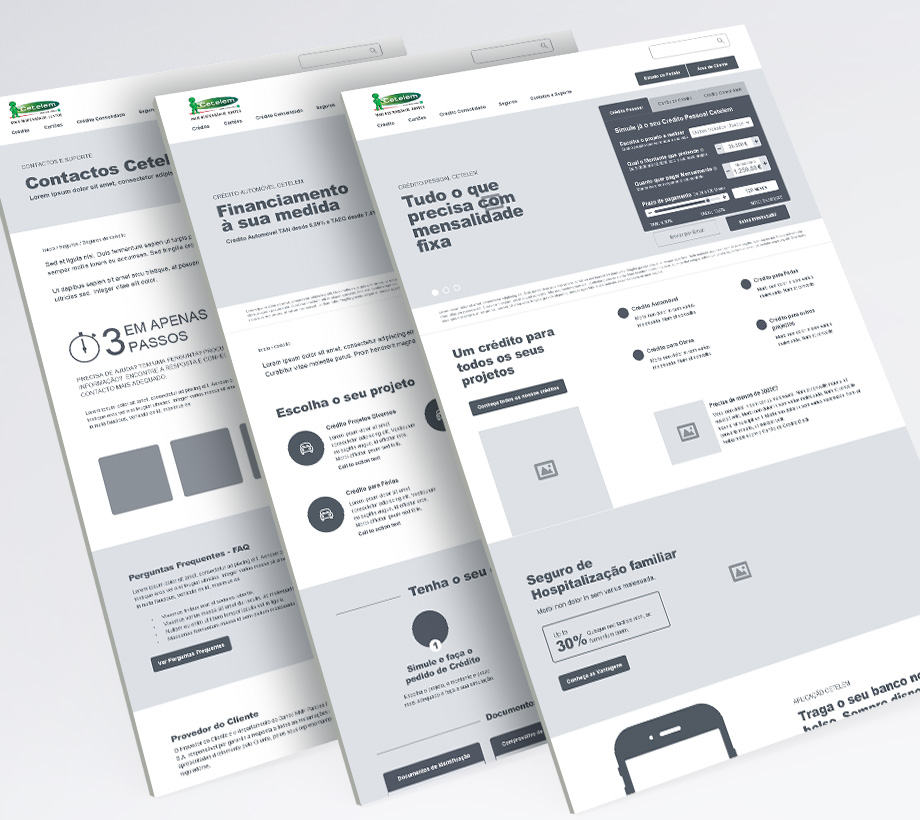
Following initial interviews with each Product Owner to understand their needs, goals and KPIs, I established them as key partners in an agile wireframing process. This collaborative approach accelerated development timelines while increasing precision with each iteration. Through active participation in Design Thinking sessions, business units became valuable contributors to defining user scenarios and aligning them with business objectives. Every team, from Personal Loans and Credit Cards to Legal and Compliance, participated in co-creating their product pages fostering greater ownership, dedication, and buy-in through meaningful involvement in decision-making at every stage
e-Loan simulators
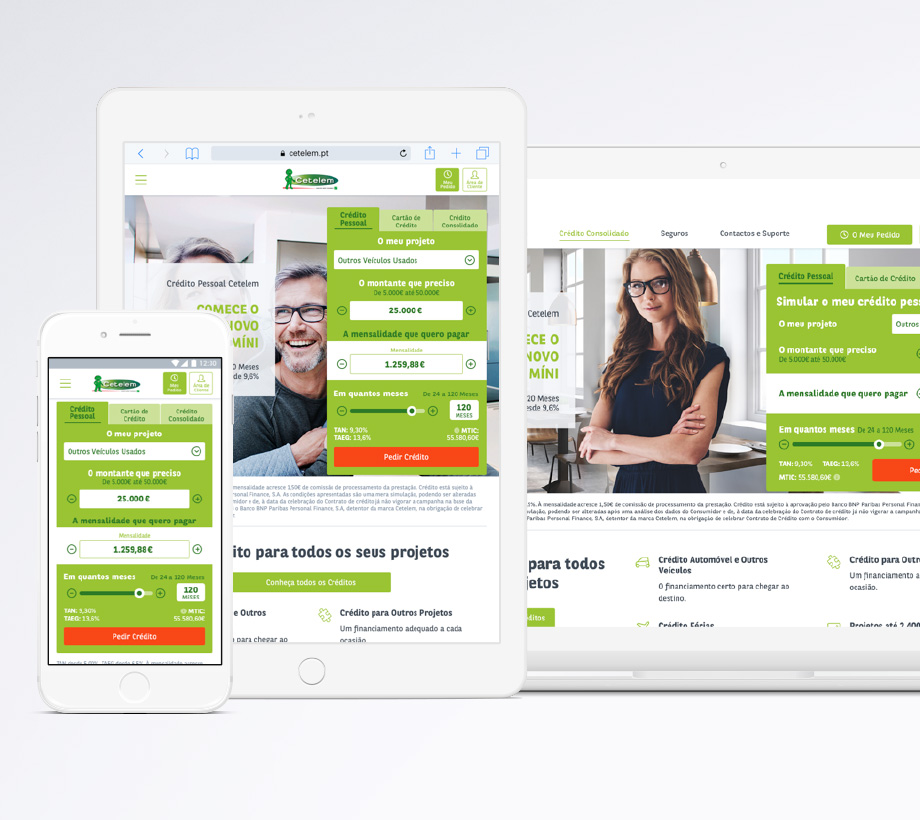
The loan simulator was the most critical component of the platform, serving as the primary touchpoint where users first engage with Cetelem's products. Despite being the main lead generation tool, it needed to balance complex legal and compliance requirements with a simple, intuitive user experience that met customer expectations. The key breakthrough was introducing reverse calculation functionality—allowing users to start with their preferred monthly payment amount and automatically calculate the loan term needed. This approach aligned with how customers naturally think about affordability, putting budget constraints first rather than forcing them to work backwards from loan amounts. This design decision transformed the simulator from a compliance-driven calculator into a user-centered planning tool, significantly improving conversion rates while maintaining full regulatory compliance.


"Setting my ideal monthly payment and seeing the loan terms adjust automatically gave me real control over the decision. I knew exactly what I was committing to before even applying."
"The simulator automatically adjusted everything else, making it so much easier to find a loan that fits my budget."
Bank client, User feedback interview
e-Loan application journey
Every Cetelem product journey begins with the loan application flow. The primary objective was creating a fully digital process that could accommodate multiple user flows and product types while maintaining a mobile-first design approach. Achieving a streamlined experience required significant optimization of the credit request form, simplifying data inputs and restructuring the information-gathering sequence. By postponing non-essential data collection until after the initial scoring decision, we reduced friction at the most critical conversion point while still meeting compliance requirements. The mobile-first approach proved essential, not only accommodating cross-device usage throughout the journey but also bridging the gap between user needs and business objectives in an increasingly mobile-centric market.


Advanced simulation
The second step presents an Advanced Simulation where users review complete loan details before proceeding. At this stage, they can still adjust initial parameters and opt into Credit Insurance coverage. All mandatory legal disclosures—including FINE documentation and interest rates—are readily accessible for informed decision-making. The sidebar displays eligibility requirements and features a click-to-call option, providing immediate support when questions arise during the application process.
User Identification
This step captures user identification along with personal and professional data required for risk scoring. All input fields were redesigned and simplified following UX best practices, with pre-filled information wherever possible to reduce manual entry—particularly important on mobile devices where lengthy forms create significant friction. The persistent sidebar displays a real-time overview of the application details and includes click-to-call support for immediate assistance when needed.


Request Decision & Secundary Info
This step delivers the credit decision, approval or denial to the applicant. By deferring non-essential information collection until after the initial scoring decision, we reduced early-stage friction and increased user willingness to complete the process. This strategic sequencing made the primary form faster to complete while accelerating time-to-decision. Once users provide the additional required information, they receive an email containing the credit contract and clear next steps to finalize their application.
e-Sign or Paper process
Following the credit decision, users choose between digital or paper-based processin a pivotal moment that determines the remainder of their journey. The paper option allows users to print the contract, sign physically and mail it with supporting documentation. The digital path offers a faster experience through SMS token-based electronic signatures and document uploads, completing the request entirely online. Users who select the digital process maintain flexibility throughout, with the ability to pause and resume later or switch to the paper process at any point if their circumstances or preferences change.


e-Sign
The digital signature represented the most disruptive innovation in the credit request flow, as users had no existing mental model for electronically signing legal financial documents. After completing KYC (Know Your Customer) verification, we enabled digital contract signing through a simple SMS-based OTP (One-Time Password). Behind the scenes, a QTSP (Qualified Trust Service Provider) generates a certified timestamp, ensuring the signature carries full legal validity equivalent to handwritten signatures.
Documents upload
To streamline the process, users upload required documentation at this stage. The interface displays a clear checklist of necessary documents, with desktop users uploading files and mobile users simply capturing photos directly within the app. Recognizing that applicants often lack immediate access to all documents, we designed the flow to allow users to skip this step and return later through their private Credit Request Status area, ensuring the application process never becomes a blocking experience.

Successful conclusion
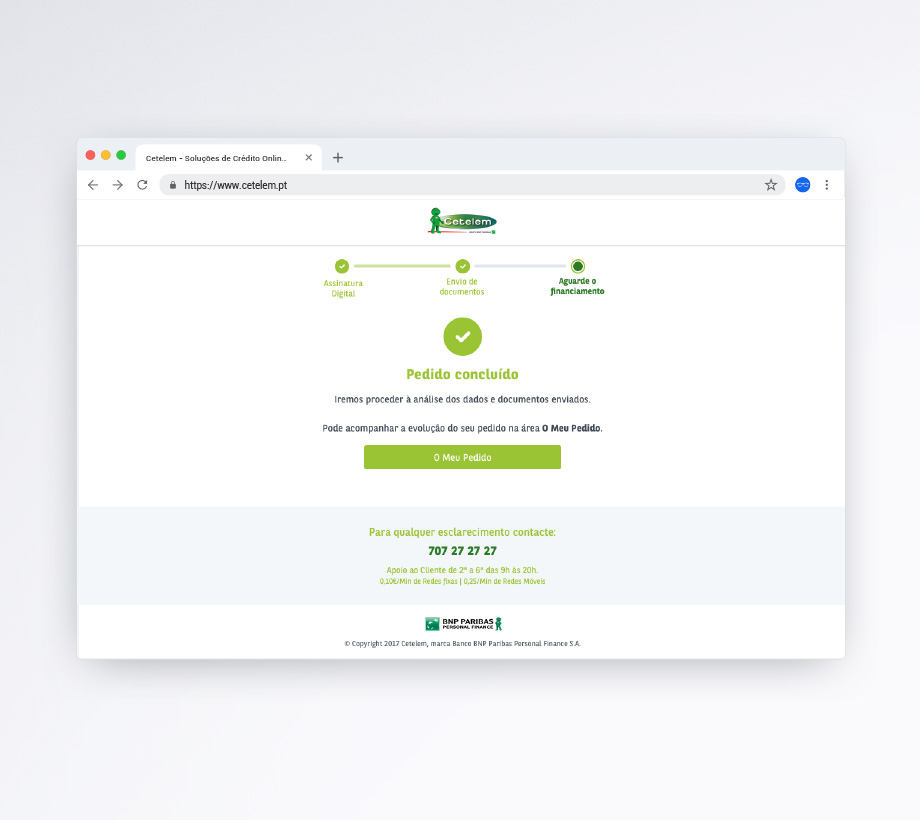
The final step confirms successful submission and informs users that their application is under review for document and data validation. Users receive access to an automatically generated private portal where they can track their application status in real-time and receive updates as their request progresses toward final approval and funding.
Credit request status
After submitting their application, users can sign in to their private portal to monitor request status in real-time. The dashboard allows them to upload missing documents, replace files flagged during validation and complete digital contract signing providing full control over the application process without requiring phone calls or branch visits.


Key Takeaway
Digital transformation in banking requires balancing innovation with trust and security. By focusing on user needs while maintaining the highest standards of data protection, we created a platform that modernized the customer experience without compromising on safety or compliance.
Results & Learnings
The platform successfully launched across web and mobile platforms, with thousands of customers using it to apply for loans digitally. Application processing times were reduced by 65% and customer satisfaction scores improved significantly.
This project reinforced the importance of user research in complex domains like banking, the value of iterative design and testing with real users and how thoughtful digital transformation can improve both customer experience and business efficiency.